

The Little Things Home Project: How AI Helped Me Finally Tackle My Never-Ending Home List
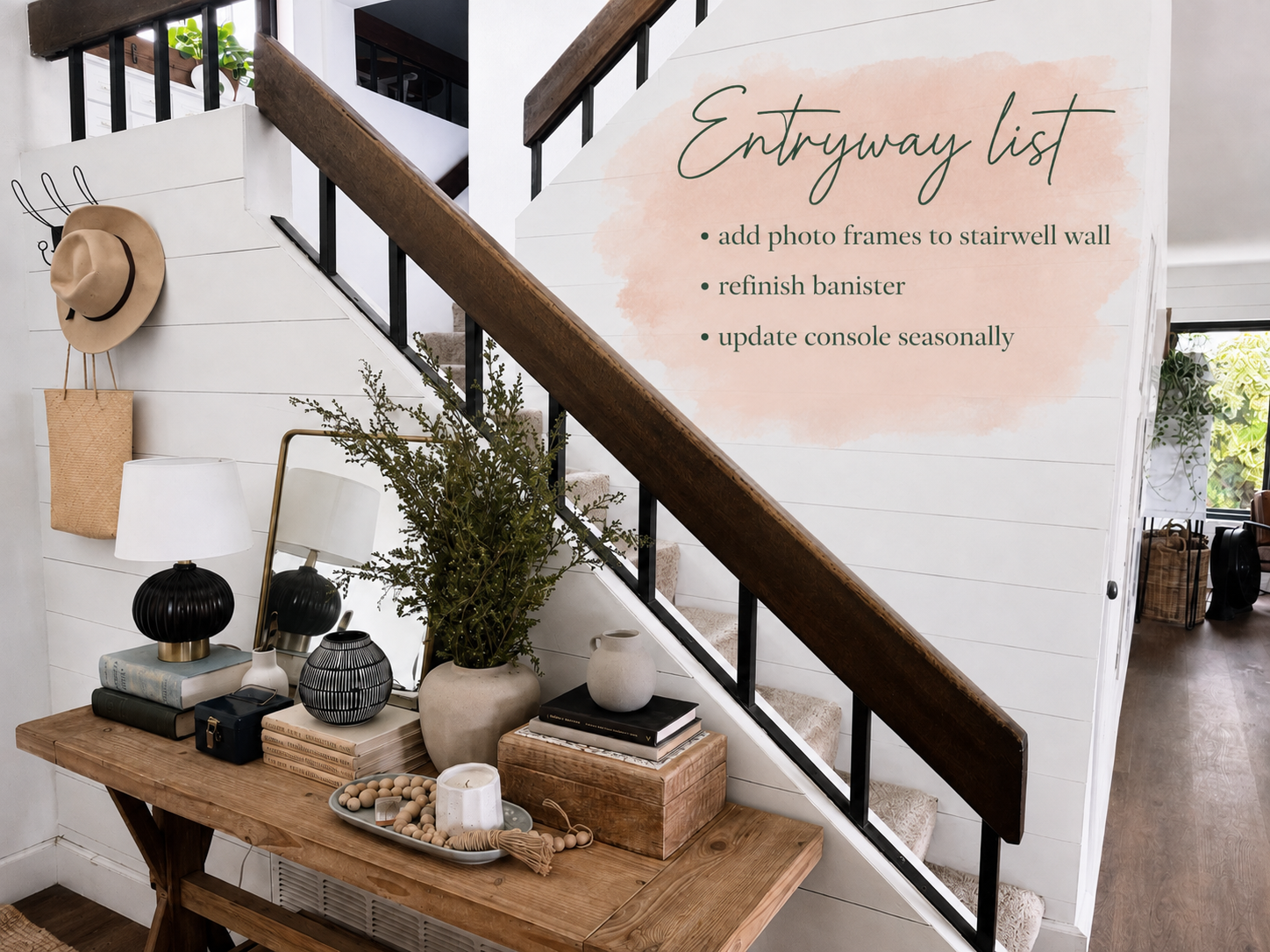
You know the list. It's not the big stuff (you're not renovating a kitchen). It's the little stuff. The baseboard that's been scuffed since March. The junk drawer you that you keep shoving things into and won’t quite close easily. The gallery wall photos that are still from when your child was missing teeth.
None of it is urgent. All of it is loud - in your head, at least. And somehow it never makes it onto the actual to-do list, because "touch up the paint by the stairs" feels too small to plan for and too annoying to keep ignoring. (I know you notice it every time you go up the stairs.)
That's exactly the problem I built The Little Things Home Project to solve - and I used AI to do it.

The mental load isn't just logistics — it's the little stuff too
We talk a lot about the mental load of motherhood in terms of appointments, permission slips, and who's got morning carpool. But there's a quieter version of it too: the running list of small home projects that live rent-free in your brain, with no system for actually getting them checked off. I am so guilty of this… but, here we are at the beginning of a new school year which I like to liken to New Year’s: an opportunity to create routines, schedules, rhythms, systems. (All my favorite words.) Not just for kids but for us moms too.
The goal here isn't a 52-week home-improvement marathon. It's small, steady progress… one little thing a week, so your house starts to feel more like you again, without adding another overwhelming project to your plate. Slowly and steadily remove the tasks into the complet3ed section and clear your brain in the process. (And let’s be real… maybe you have the means to hire all of this done and in that case, I really hope it doens’t take 40 weeks! But, you still need to get organized enough to know what to ask for.)
The system: brain dump → AI organizes it → you just show up
Here's the process, broken into the exact five steps in the printable:
1. Brain dump it all out. Walk through your home room by room and write down every little thing you keep meaning to do - no editing, no judging. Clean it, organize it, fix it, refresh it, whatever. Just get it out of your head and onto paper.
2. Hand your list to AI. This is where it stops feeling like a chore and starts feeling like magic. Copy the AI prompt straight into ChatGPT, paste your messy list underneath it, and let AI do the annoying part: sorting everything into Clean, Organize, Fix, Refresh, and Home Project categories, and estimating how long each one will actually take.
3. Let AI break the big stuff down. Got something on your list that's really more of a project than a task? AI splits anything oversized into smaller 1–2 hour chunks, so nothing on your final schedule feels like it's going to eat your whole Saturday.
4. Get a realistic 40-week plan - not a 52-week guilt trip. This is the part I love most: AI builds you a week-by-week schedule, one project per week, alternating easier wins with the more involved stuff, and leaves a few weeks open on purpose for holidays, travel, and real life. Because you don't need 52 productive weeks. You just need 40.
5. Print it, pin it, check it off. One project. One to two hours. Once a week. That's it.
Why this is the whole point of what I do here
This is the heart of what The Modern Mom Life is about: taking a tool like AI that sounds intimidating and turning it into something that quietly makes your real life easier. You don't need to know how to "use ChatGPT." You just need to know how to copy, paste, and follow the plan it hands back to you.

Grab the free printable
I put the whole system into a 5-page printable — the AI prompt, your brain-dump sheet, and the full 40-week schedule — so you can start this weekend if you want to.
The Little Things Home Project Printable
Pick one thing. Start this week. Your house — and your brain — will thank you by next year.
