

The Back-to-School Reset: How to Get Organized Before the Chaos Hits (Using AI as Your Secret Weapon)
You start noticing it in the stores before you feel it anywhere else. The end caps switch over, the notebooks and backpacks show up next to the pool floats, and it feels way too early - summer just started, didn't it? And then, almost overnight, it isn't early anymore. School starts, abruptly, with what feels like no warning at all.
There's a real duality in that. A new school year is exciting - new teacher(s), new grade, new chapter. But it's also the end of summer, and for most families, that's genuinely a little sad. We don't always give ourselves permission to feel both at once.
And because it hits so quickly, it turns into panic instead of just a transition. Two things stack on top of each other: it comes sooner than we're ever actually ready for, and the school checklists themselves don't come out until late (in our case) - by which point half the shelves have already been picked over by everyone else who had the same idea.
So let's get ahead of both problems. Here's a simple system - broken into the things that actually create the chaos - so you're working with the timeline instead of getting run over by it.
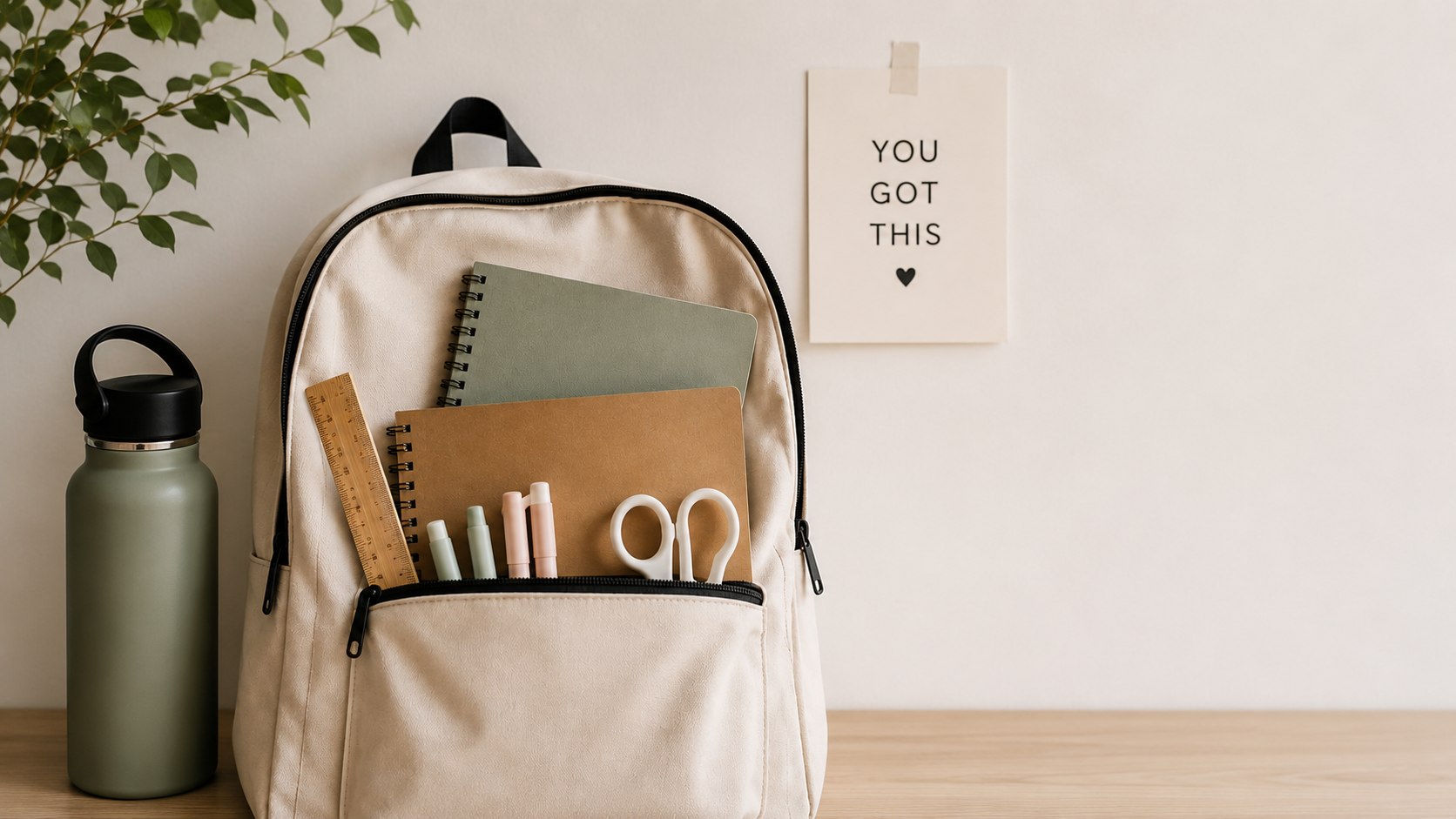
1. The Supply List Avalanche
Here's the strategy: don't wait for the checklist. Shop early, even before it's out, because you already know the standards - folders, a pencil case, notebooks, the stuff you buy basically every single year. Pull out what's left from last year first and see what actually needs replacing before you buy anything new.
And pay attention to when you shop, not just where. The middle of the day, the week everyone else is panic-shopping, will feel completely overwhelming - picked-over shelves, crowded aisles, a line for the glue sticks. Shop when the store opens, or go in the evening when it's quiet. Same list, completely different experience.
The AI shortcut: Once the official checklist finally does show up (often late, often for multiple kids in different formats), drop it into an AI chat and have it combine everything into one master list organized by store aisle - so you're not cross-referencing five documents with a cart full of children.
Try this prompt: "Here are supply lists for my three kids in grades 2, 4, and 6. Combine them into one shopping list organized by store aisle, and flag anything that's duplicated across kids so I only buy it once."
2. Clothes Shopping Without the Meltdown (Yours or Theirs)
This one starts a couple of weeks out, not the week before. Go through the closets first - actually purge what no longer fits, check current sizing, and be honest about what's worn through. That purge does double duty: it clears the room out for a fresh start to the year, and it tells you exactly what you're shopping for instead of guessing. Don't forget the "anticipate" items either - things like a new backpack that wears out every year and are easy to forget until the morning you need one.
A simple running list to start from, per kid:
5 pairs of shorts
5 pairs of pants
10 t-shirts
10 pairs of underwear
A few pairs of shoes
(adjust down based on what survived the closet check)
Once you know the gaps, spread the shopping out instead of doing it all in one trip. Check 3-4 of the stores or websites you normally shop at, keep an eye on sales, and plan a couple of smaller trips rather than one long one - kids have a short attention span for shopping, and neither of you needs the marathon version. If you're ordering online, do it early enough that there's real time to try things on and send back what doesn't fit or isn't right, instead of scrambling the week before school with no room for exchanges.
The whole point is being anticipatory instead of reactive. A little bit at a time, starting early, means the room is organized and ready to go before the first day - which sets your kid up to start the year from a place of "ready," not "scrambling."
The AI shortcut: Once you know the gaps, ask AI to help you turn that list into a realistic shopping plan based on your kid's school dress code and your climate - so you're buying exactly what's needed, not extra.
Try this prompt: "My daughter is in 4th grade in [your city], school starts in August, and the dress code requires closed-toe shoes and no graphic tees. Help me build a simple 2-week rotating outfit list so I know exactly what to buy instead of guessing."

3. Getting Your Kids Mentally Ready (Not Just Physically Stocked)
Mental prep looks different depending on the kid and the year, but a few things matter across the board. If they're starting at a new school, comfort with the actual campus goes a long way - knowing where their classes are, understanding how the schedule works, even having a plan to meet up with a buddy at some point during the day so the first day isn't a total unknown from start to finish.
Beyond logistics, it's the conversations. Actually asking how they're feeling about it, not just assuming. Giving them some positive affirmations along the way - reminding them what they're good at, what's stayed the same, what they can look forward to. Kids pick up on our energy around this transition just as much as they process their own.
The AI shortcut: Use it to help you have the conversation, not replace it. Ask for age-appropriate conversation starters or a simple activity you can do together that gets your kid actually talking instead of shutting down with "I don't know" and "it's fine."
Try this prompt: "My son is starting 1st grade and seems nervous about it. Give me 5 simple conversation starters I can use over dinner this week to help him talk about what's worrying him."
4. Carpool & Scheduling Tetris
Carpool is one of those things that has to get worked out with other parents ahead of time - it doesn't organize itself once school starts. Start close to home: neighbors first, since consistency and convenience matter more than anything else here. If you're willing to go a little out of your way, friends whose kids are already in your kid's friend group are worth it too - it makes the ride part of the fun instead of just a logistics problem.
Whatever you land on, the goal is consistency. The same days, the same pickup order, something easy enough to remember without a spreadsheet - because a rotation nobody can keep straight creates more stress than not having one at all.
The AI shortcut: Once you know who's involved, let AI build the actual rotation and draft the text that proposes it, so you're not the only one doing the mental math every single week.
Try this prompt: "I need to set up a carpool with 2 other families for morning drop-off, Monday through Friday. Help me build a fair weekly rotation and write a friendly group text proposing it."
5. Building the Before & After School Routine (Before You Need It)
Start the schedule the week before, not the first day. Move bedtime and wake-up time back in advance so your kid's body is already adjusted when school starts, instead of trying to reset their whole rhythm on day one while they're also nervous about a new teacher.
Get the room ready to match the routine. A designated spot for the backpack, a spot for shoes, a spot for papers coming home from school, and a homework area with supplies already sitting there - so nothing turns into a five-minute search every single day.
From there, a simple checklist for the kids works better than reminding them of everything yourself, every single day. Before school: brush teeth, get dressed, shower, eat breakfast, pack lunch, check backpack. After school: homework, read for 30 minutes, get organized for the next day. Once it's written down somewhere they can see, it stops being something you have to say out loud on repeat.
Lunches deserve their own moment here too, especially if your kid packs instead of buys. This is a real chance for some age-appropriate independence — and honestly, it's easy to wait longer than you need to before handing that over. Brainstorm lunch ideas together with your kid, turn that into a written list, and build it into your regular grocery list each month. Then before school, they can look at their own options and pack what they want instead of you deciding for them every morning.
The AI shortcut: Ask AI to help you design a realistic before-and-after school routine based on your actual schedule - not some Pinterest fantasy where everyone wakes up at 6:00 AM smiling - and to turn your kid's lunch brainstorm into a simple written list they can pick from.
Try this prompt: "Help me build a realistic before-school and after-school routine for two kids, ages 6 and 9. We leave the house at 7:45am and get home at 3:30pm. Include a homework and screen-time plan, plus a simple lunch-packing checklist my kids can use on their own."
One More Thing: The First Day Photo
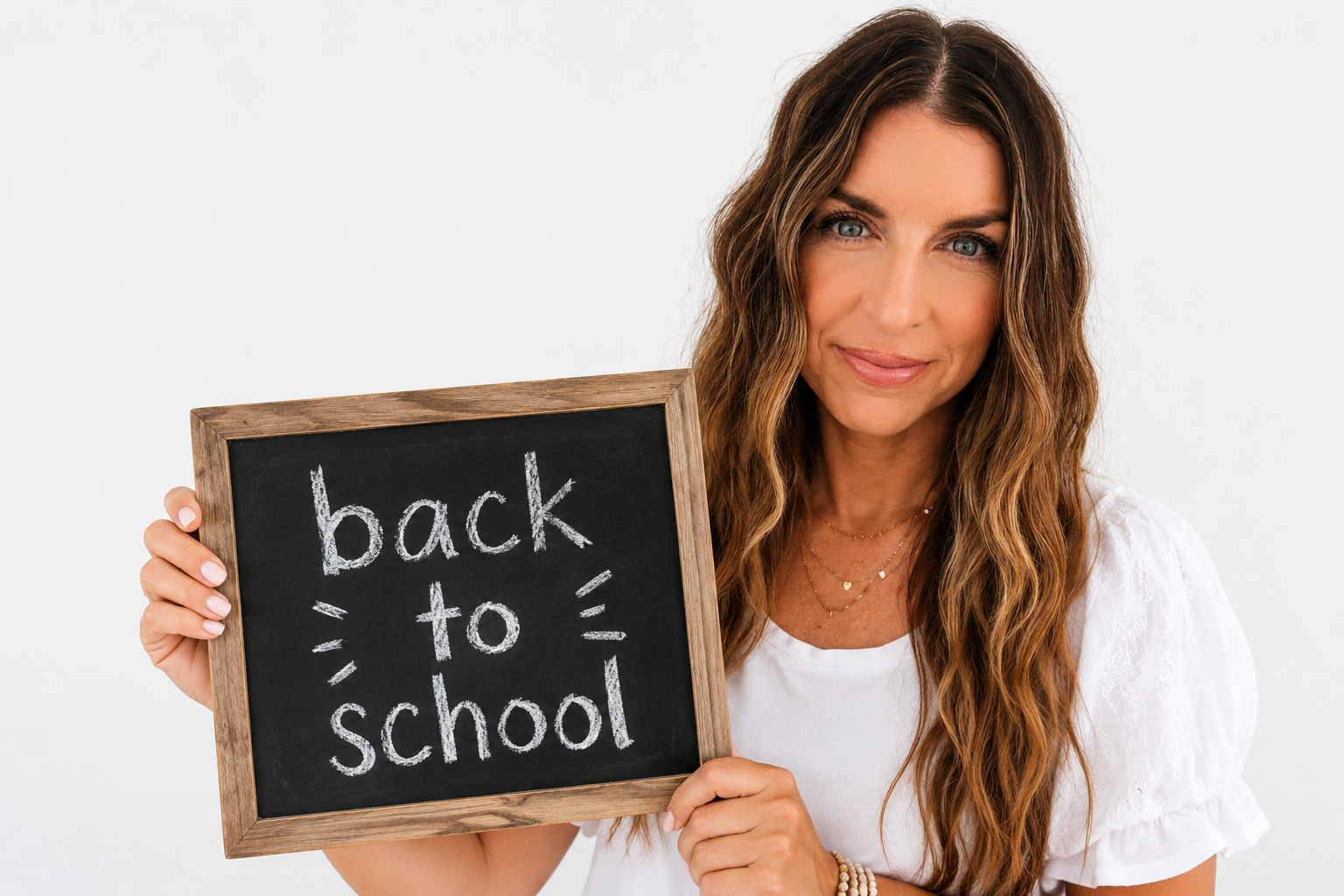
Have something ready ahead of time for the first day of school picture - a sign, a banner, a little chalkboard, whatever fits your style — so it's not something you're scrambling to throw together at 6:45 AM on the actual day.
When my son Clay started kindergarten, I found a printable sign set that covered every grade, K through senior year, and had them professionally printed at a print shop. We've used the same set every single year since. Looking back now, every year of photos has the same consistent sign, just a different grade - and my daughter is using the same set behind him. It's a small thing, but it's one less decision on a morning that already has enough of them, and it turned into something we'll have all the way through graduation.

The Bigger Picture
If you're feeling overwhelmed by all of this right now, that's okay. It's genuinely allowed. Back-to-school is a lot, even with a plan.
And some of what makes it heavy isn't logistics at all. If this is a first-time drop-off for you, that can just be sad - dropping off your baby at school for the first time is a real moment, and it deserves to be felt, not just powered through. And even if this isn't your first year doing this, every new school year comes with its own version of that feeling: another grade, another milestone, another sign of how fast they're growing up. We all wish we could slow that part down, and none of us really can.
So here's the reminder underneath everything above: make the plan, get organized, and then give yourself the actual time to execute it instead of doing it all in the last week. That's really the whole point - efficiency, anticipation, and organization aren't about doing more, they're about giving yourself back the time and calm to actually be present for the parts of this that matter, including the hard, bittersweet parts.
That's really the whole idea behind what I'm building: using AI not as one more thing to learn, but as the quiet assistant that takes the mental load off your plate so you can actually be present for the parts of motherhood that matter. Back-to-school season is just the first place I wanted to show you how that works in real life.
More of this coming very soon - including the full toolkit I'm building specifically for moms who want their AI to actually do something for them, not just be another app. Stay close.
