

10 Things I Stopped Doing (that gave me 2 hours back every day)
There's a version of me from a few years ago who was doing everything. Remembering everything. Tracking everything. Running the calendar, planning the meals, managing the chores, buying the birthday gifts, scheduling the appointments, and somehow still feeling like I was always one step behind.
Sound familiar?
I'm a mom of two teenagers, an ADHDer, and someone who has built systems into every corner of my life out of pure necessity. My brain doesn't do well without structure underneath it - so over the years I got very good at creating it. What I didn't realize until recently was how much of that structure I was still carrying manually, in my head, every single day.
Then AI entered the picture. And I started handing things off.
Not to another person. Not to a paid service. To a system - one that thinks ahead, generates ideas, formats information, and does the mental heavy lifting I was still doing alone at 10 PM when I should have been asleep.
These are the 10 things I stopped doing. And the 2 hours I got back? I spent them on my family, my hobbies, my rest, and honestly - myself.
Let's get into it.

1. I Stopped Keeping the Family Calendar in My Head
For years I was the human Google Calendar for my entire family. Doctor appointments, school events, practice schedules, permission slip deadlines, teacher workdays - all of it lived in my brain, rent free, taking up space I didn't have. The mental load of just remembering everything was exhausting before the day even started.
Now it all lives in my calendar with reminders set at exactly the right time - not just "day of" but far enough ahead to actually do something about it. Practice at 4 PM gets a reminder at 2:30. The school fundraiser deadline gets flagged a week out. The dentist appointment gets a prep reminder so I can e-mail the school attendance office.
The shift wasn't just organizational. It was permission - to stop holding everything in my head and trust that the system would catch it. That mental exhale alone was worth it.
2. I Stopped Being the Only Reminder System in the House
I have a tendency to over-function for my kids. I'm a fixer by nature and for a long time that meant I was also the scheduler, the nagger, the "don't forget your water bottle" person, the one tracking their deadlines while they walked out the door completely unbothered.
The older I get, the more I realize this is serving no one - not me, and honestly not them either.
Kids need to learn to manage their own schedules and responsibilities (and keep in mind, my kids are teens). But that doesn't just happen - it has to be taught. So instead of continuing to be their personal alarm system, I shifted the job to them by teaching them how to use the tools that can help them.
Once a week we do a quick check-in. Not a lecture, not a nag session - just a few minutes where I ask them what's coming up and help them enter it into their own calendar with their own reminders. They own it. They set it. When the reminder goes off it's their phone telling them, not me.
The nag disappeared almost immediately. And more importantly, they're learning something I wish someone had taught me earlier - that managing your life is a skill, and it starts with knowing what's on your plate.
3. I Stopped Forgetting Birthdays and Holidays Until the Last Minute
Every birthday, appointment, and event lives in my calendar now - with reminders set far enough in advance to actually do something about them.
But birthdays deserve their own system because birthdays require action, not just awareness. Here's how mine works:
I have every birthday in my calendar - family, friends, teachers, my kids' friends - all of it. For each person I ask myself a few questions: Are they local or across the country? Do they need a card, a gift, or both? Does the gift require personalization or lead time? For long distance birthdays, I set two reminders - one to buy the gift, one to mail it (or at least allow for delivery time and ship directly- way more efficient).
At the end of every month when I'm doing my meal planning for the next month I batch-check who's coming up. Any birthday cards needed go directly onto my grocery list for that month. I shop for everyone in one trip. Done.
(I have so much more to share on the art of thoughtful gift giving - that's a whole post on its own. Coming soon.)
4. I Stopped Answering "What's for Dinner?" Every Night
Honestly I solved this one long before AI entered my life. For years I've had a physical menu board in my kitchen - each week I write out the dinners and when someone asks I just point. No explanation needed. I still do this but now just out of habit more than necessity.
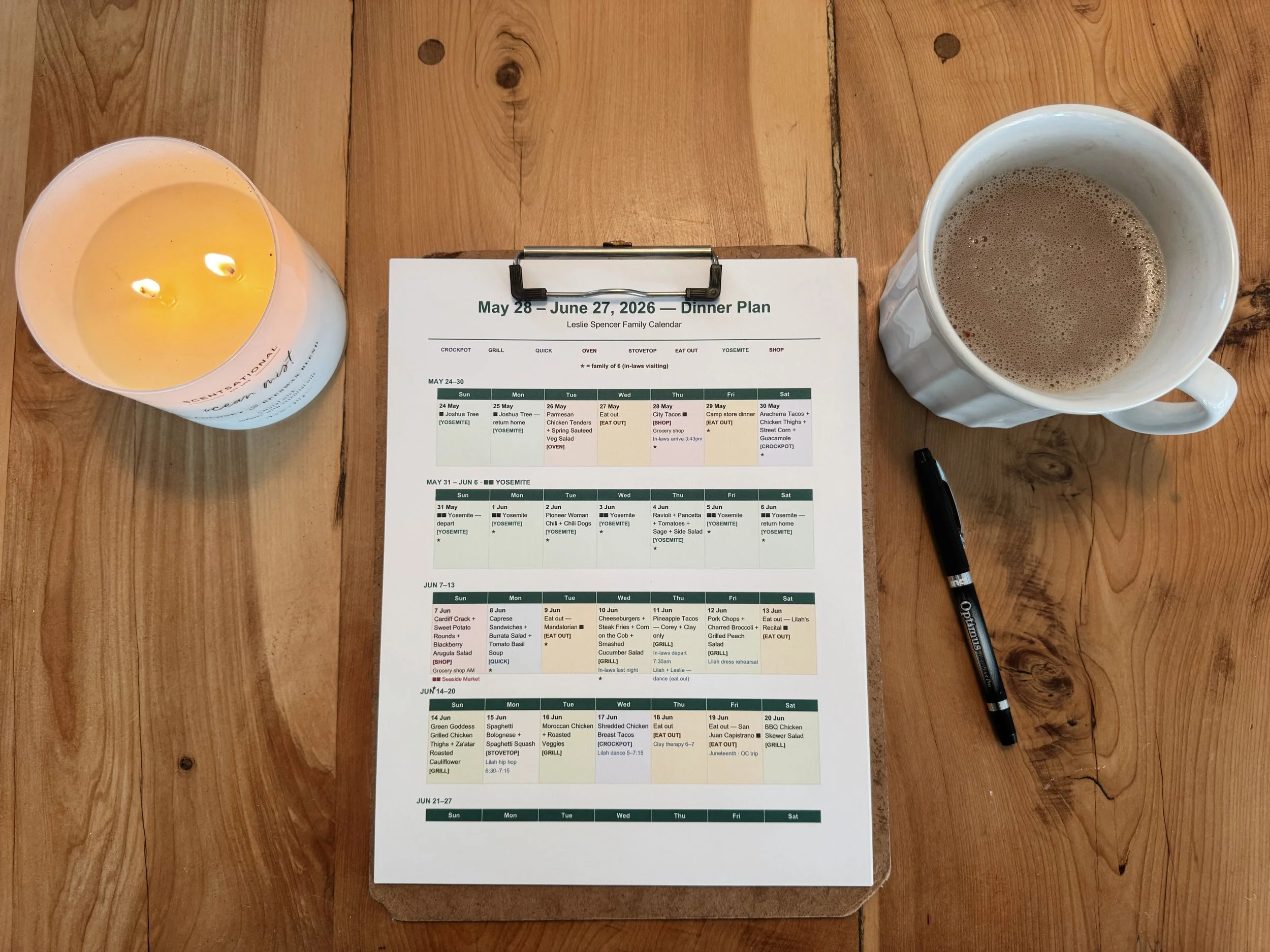
But AI took it further. Now Claude generates my entire month of meals in a fraction of the time using our real recipes, our schedule, our budget and yes - the reality that my son (who is a picky eater) will eat most meals only if wrapped in a tortilla. We call it chicken 100 ways. Tonight it's Moroccan chimichurri chicken with grilled vegetables. For him? We wrap our dinner and a burrito and he eats it.
But here's the upgrade I just implemented that changed everything - I took that AI-generated meal plan and synced it directly to a shared Family Dinners calendar in Google that my whole family can see. Every dinner is already there. No one has to ask. No one has to wonder. They just check the calendar.
Setting it up took one afternoon. Now it runs itself.
(Want to do this too? I have a full step-by-step walkthrough coming!)
5. I Stopped Rewriting My Grocery List Every Week
What used to take me four hours a month to meal plan, AI now does for me - using my actual recipes, my schedule, my budget, and a realistic look at how much time I actually have to cook. But honestly? The grocery lists are the best part.
Every month, six lists are automatically generated from my meal plan. I shop three stores on my big grocery day at the beginning of the month, then one store for produce replenishment the following three Sundays. I just grab the list and go.
And these aren't ordinary lists. They're color coded by staple, recipe ingredient, and "check inventory first." And they're organized in the order items actually appear in my store.
I genuinely did not know grocery shopping could feel this easy.
6. I Stopped Letting House Maintenance Sneak Up on Me
We don't have AC - we live by the coast so it's rarely a problem. But there are about two weeks a year I really wish we did. Case in point: we lived in our house for three full years before I noticed a mysterious switch plate in our bedroom. I turned to my husband and said "what do you think this does?" - flipped it… and the whole house fan in the attic activated and pulled every bit of hot air out of our home. We were cool and refreshed within minutes.
We laughed for a long time about that one. Three years, people. Three years.
Which is exactly why I now use Claude to generate a seasonal home maintenance checklist. Because left to my own devices I will apparently live in a hot house for three summers before discovering the solution was one switch away.
Here's what I do: I asked Claude to create a complete home maintenance checklist broken down by season - and it thought of things I would never have remembered on my own. Flushing the water heater. Cleaning the dryer vent. Checking window seals before “winter” (if can can even call it that in Southern California). I then added each task as a recurring annual event in Google Calendar with a reminder two weeks ahead so I have time to schedule someone or grab supplies.
I set it up once. My future self is taken care of forever.
(Also, check out my blog post: The Little Things Home Project to see how you can truly get items knocked off your home to do list one project/per week.).)
7. I Stopped Being the Only One Who Knew Where Everything Was
I'm a firm believer that everything in a home deserves a home. Not just shoved in a drawer - an actual designated, logical, labeled place that makes sense for how your family actually lives. Our home isn't big but it feels spacious because we're intentional about what comes in and conscious about visual clutter. A home should be a place of restoration and inspiration. It should reflect who you are and make you exhale when you walk in the door.
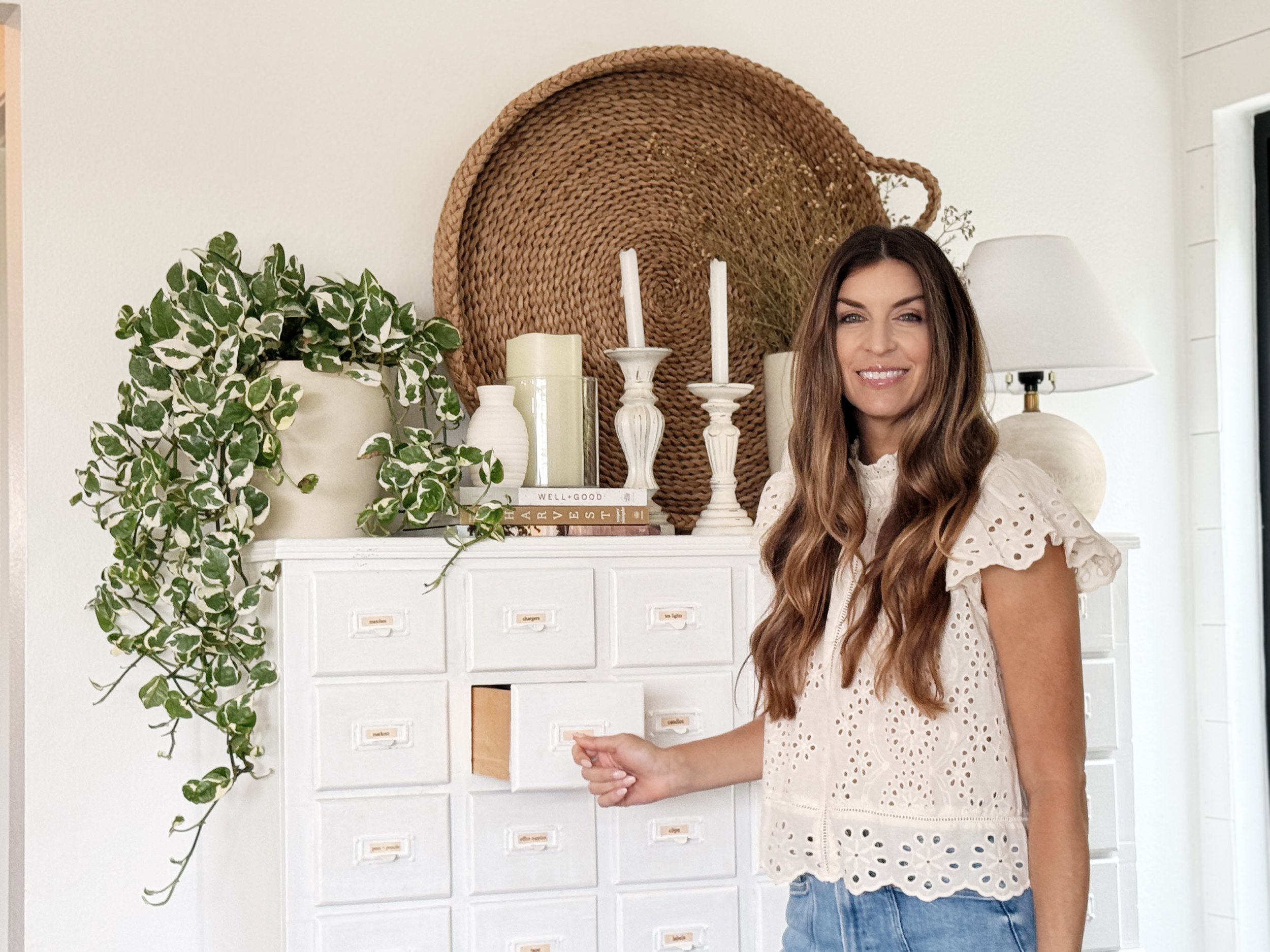
One of my favorite examples is what we call the Brain of the House - an antique card catalog with 45 individual drawers, each one labeled. Playing cards. Cords. Scissors. Matches. Office supplies. It's essentially a glorified junk drawer, except nothing is jumbled together and anyone in the family can find exactly what they need without asking me.
That's the whole point. When systems are labeled, logical and visible the question "Mom where is the -" stops mid-sentence because they already know.
I also have open shelving in my dining room where pantry staples live in glass jars, mixed in with serving ware, fresh plants and baskets. It's functional, it's beautiful and it's completely accessible. I call it functional decor - where everything earns its place by being both useful and intentional.
Here's where Claude comes in: I used it to help me create a complete home inventory by room - what we have, where it lives, and what needs restocking. It also helped me build a labeling system that actually makes sense for how my family moves through the house. You can prompt it with your specific rooms, your storage situation, and your family's habits and it will think of categories and solutions you haven't considered.
The goal isn't a Pinterest perfect home. It's a home where nobody has to ask you where anything is.
8. I Stopped Assigning Chores and Hoping for the Best
For a long time chores in our house worked like this: I assigned them, reminded them, reminded them again, got frustrated, and somehow ended up doing it myself. Sound familiar?
The shift came when I stopped being the reminder and made their devices do it instead. Using Claude I created a weekly chore list for each of my kids — age appropriate, realistic, and specific. My son takes the trash out every night after dinner. My daughter has her own set of responsibilities. But instead of me telling them - their calendars tell them. Each chore lives as a recurring event on their own Google Calendar with a reminder that goes off at exactly the right time. Their phone nags them. Not me.
We also added a visual accountability system - a whiteboard outside each bedroom door with a Monday through Friday checklist. Every morning before school their job is to clean their room and make their bed. We check it after they leave. Earn it - they get their allowance deposited directly into their account through our banking app. Miss it two days in a row - they lose the privilege for the week. No arguments. The system is the referee, not us.
And for the moments in between? I've started teaching them what I call the less than 60 second rule - before you leave a room, take one look around and spend less than 60 seconds finishing anything that's almost done. Close the closet door. Turn off the light. Throw the clothes in the hamper. Put the pillows back on the bed. Almost nothing actually takes more than 60 seconds. The house stays remarkably tidier when everyone does this.
I'll be honest - I needed this rule for myself first. My ADHD brain is already three hours ahead of whatever I'm currently doing, which means I leave a trail. You can actually tell where I've been in the house by following my shoes. I take them off without realizing it, have absolutely no memory of it happening, and spend a portion of every day retracing my steps to find them. My college roommates used to hide them because they were so tired of tripping over them.
The 60 second rule didn't cure me. But it helped. And if it helped me it can help a teenager. Maybe. Hopefully.
9. I Stopped Letting Our Marriage Run on Autopilot
Over a decade ago my husband and I started what we call our Marriage Retreat - four nights away, just the two of us, laptops open, working through an ongoing outline we've been refining ever since. Parenting, goals, vacations, home projects, budgets, communication - all of it. It's honestly one of the best things we've ever done for our relationship.
But a yearly retreat only works if you stay connected in between. So we also take our dog on a walk together every single day - thirty minutes to talk, problem-solve, laugh, or just be. And now that our kids are old enough to stay home we're getting more intentional about date nights twice a month. Outside the house. Just us.
Here's where AI has started earning its place in our marriage - and I don't mean that in a weird way. I now use Claude to help prep our annual retreat outline, generate fresh discussion questions for each category, and brainstorm date night ideas when we're stuck in a rut. But my favorite use is generating weekly connection prompts for our dog walks. Instead of defaulting to schedules and logistics we'll ask each other something deeper - a question about a dream, a memory, something we're proud of, something we're working through. Claude generates a whole list at once and we just work through them over time.
Thirty minutes a day of actually talking turns out to be pretty good for a marriage. Who knew.
(The Marriage Retreat framework is something I get asked about constantly - I'm planning a full post on this soon. If you want to be the first to know when it's live, make sure you're subscribed.)
10. I Stopped Decluttering Without a Plan
I have a simple philosophy about what comes into our home: for everything that comes in something goes out. I'm not rigid about it but it's a helpful mental filter that keeps things from quietly accumulating. A child tries on something that no longer fits - instead of tossing it back in the closet it goes directly into what we call the out bag. One designated spot in our house where donations collect until the bag is full and we drop it off. No big decluttering day required. It just flows.
Because here's what I know to be true: clutter that lives in your house lives in your head. Everything you own is something you have to be a steward over. Too much stuff isn't just a storage problem - it's a mental load problem. And we already have enough of those.
Where Claude comes in is the bigger picture decluttering - the annual reset. I asked Claude to create a yearly decluttering timeline broken down by area of the house. The kids' closets in fall before school starts. The medicine cabinet in January. The pantry before my big monthly grocery shop. The garage in spring. Each one shows up as a recurring annual reminder in my Google Calendar so I never have to think about when to do it - I just get the nudge and spend an hour handling it.
I also asked Claude to generate a spring cleaning checklist specific to our house - room by room, category by category. It thought of things I would have skipped entirely. And because it lives in my calendar it happens every year whether I'm thinking about it or not.
My future self keeps thanking me. I keep telling her she's welcome.

This Is Just the Beginning
Everything I've shared here started with one decision: to stop carrying it all alone.
The systems I've built over the years gave me breathing room. AI made that breathing room available to everyone - not just the naturally organized, not just the tech savvy, not just the moms who somehow have it all together. All of us.
You don't have to implement all 10 of these at once. Pick one. The calendar. The grocery list. The chore system. Start there and feel what it's like to have one less thing living rent free in your head.
That feeling? That's what The Modern Mom Life is all about.
If you want to go deeper on any of these systems make sure you're subscribed to the newsletter.
You've got this. And now you've got better tools to prove it.
~ Leslie
Enjoyed this post? Save it, share it with a mom friend who needs it, and come find me on @themodernmomlife - The more the merrier in this community.
